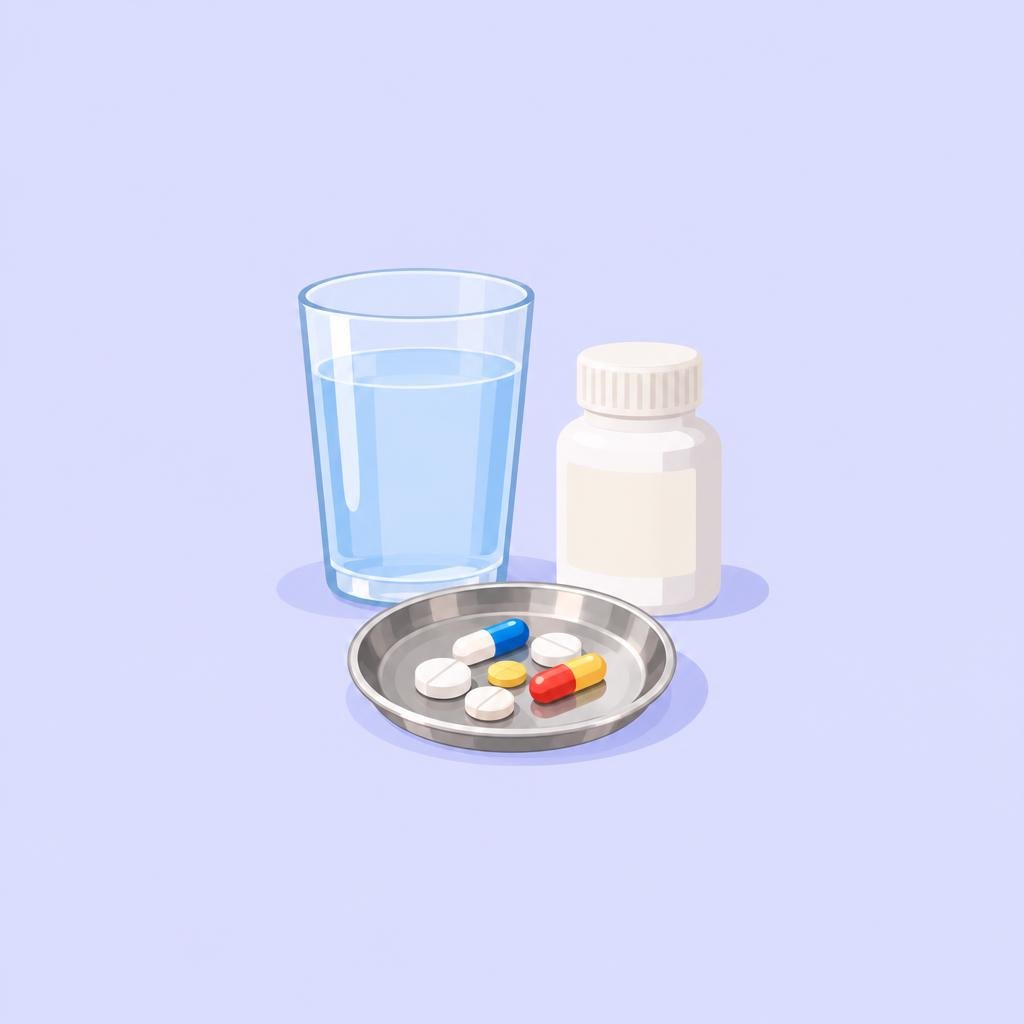
It is late at night and your back is hurting. Someone at home says, "Get an injection, it works faster than a tablet." Or your child has a cold, and a neighbour suggests, "Give an antibiotic, it will settle fast."
Both ideas come from the same place: we all want quick relief.
In short:
- For pain, medicine given into a muscle or a vein can work sooner than a tablet.
- Injections are not always needed, and a doctor or nurse can say which way is right for you.
- Antibiotics work only on some infections caused by bacteria, not on colds, flu or most coughs.
- Taking antibiotics when they are not needed can make them stop working later, when you really need them.
How medicines get into your body
Most medicines are made to be swallowed. A tablet or liquid goes down to the stomach, then into the blood, and then travels to the place where it is needed. This takes a little time.
An injection is different. The medicine is pushed through the skin with a needle, so it does not pass through the stomach. How fast it acts after that depends on the type of injection.
Tablets and liquids
- Easy to take at home.
- Often a suitable choice, but which one is best and safest depends on the person and the medicine.
- For pain, they usually take about 30 minutes to work.
Injections
- Pain-relief injections should be given by a doctor or nurse, unless self-administration has been prescribed and taught. Some other prescribed injections can be given at home after a health worker teaches you how.
- Some go into a muscle, some into a vein, and some just under the skin.
- Not every injection reaches the blood quickly. Medicine given into a vein gets into the blood fastest. Medicine given into a muscle is slower than that.
- For pain-relief medicines, an injection into a muscle usually takes about 10 to 15 minutes to work, and can work sooner than a tablet. But this depends on the medicine, so not every muscle injection acts faster than a tablet.
So does an injection give faster relief?
For pain, often yes — but it depends on the type of injection. Not every injection reaches the blood quickly, so not every injection gives relief sooner than a tablet.
Faster does not always mean better, or needed. Injections into a muscle are not needed very often. They may be used as extra relief when pain is unexpectedly strong. In most everyday pain, tablets or liquid work well.
A needle has its own problems too — the spot where it went in can be sore or bruised. So it is fair to ask your doctor: do I really need an injection?
When antibiotics help, and when they don't
Antibiotics are medicines for some infections caused by bacteria. They kill bacteria or stop them from spreading.
They do not work on viruses. Colds, flu and most coughs are caused by viruses, so antibiotics will not make them heal faster.
Many mild infections caused by bacteria also get better on their own. Antibiotics are needed for some bacterial infections that are unlikely to clear on their own, or that could cause serious problems.
How antibiotics stop working
When antibiotics are taken when they are not needed, some bacteria are not killed by them. These bacteria survive and multiply. This is called antibiotic resistance.
Then the same antibiotic may not work when a person really needs it. This is why doctors are careful about when they prescribe them.
Why these ideas feel right
We want relief quickly, and an injection feels strong and fast. Antibiotics feel like a cure for any infection. When a fever settles after a medicine, it is natural to think that medicine did it. These feelings are easy to understand.
What you can do
- If you are in pain, ask your doctor or nurse which way of taking pain relief suits you best.
- Tell your nurse if your pain is bad or getting worse.
- Ask for help early — pain is easier to control before it becomes very bad.
- Ask your doctor whether you really need an injection.
- Take antibiotics only when a doctor prescribes them for you.
- Do not borrow antibiotics from friends or family.
- For colds, flu and most coughs, ask a doctor or pharmacist what will help instead.
- If you are given antibiotics, take them as your doctor or pharmacist tells you.
When to see a doctor
See a doctor about pain that is hard to manage. Some signs are more serious, and then you need medical help without delay.
- Pain that is bad.
- Pain that is getting worse.
- Pain that is hard to control.
- Fever that does not settle, or keeps coming back.
- Trouble breathing, or a child who is drowsy and hard to wake — treat this as an emergency and get medical help right away.
Frequently asked questions
Is an injection always better than a tablet?
No. An injection can work faster for pain, but it is not always needed, and it depends on the type of injection. Many everyday problems are treated well with tablets or liquid.
Can antibiotics cure my cold or flu?
No. Colds, flu and most coughs are caused by viruses, and antibiotics do not work on viruses.
Why can't I take antibiotics I already have at home?
An antibiotic is chosen for a particular infection, and taking one when it is not needed can make it stop working later. Take them only when a doctor prescribes them for you.
Should I ask for an injection when my pain is very bad?
Tell your doctor or nurse about your pain. They can decide which type of pain relief is best for you, and whether an injection is needed.
Any health problem is safest when a doctor sees it — please talk to your doctor about your own health.