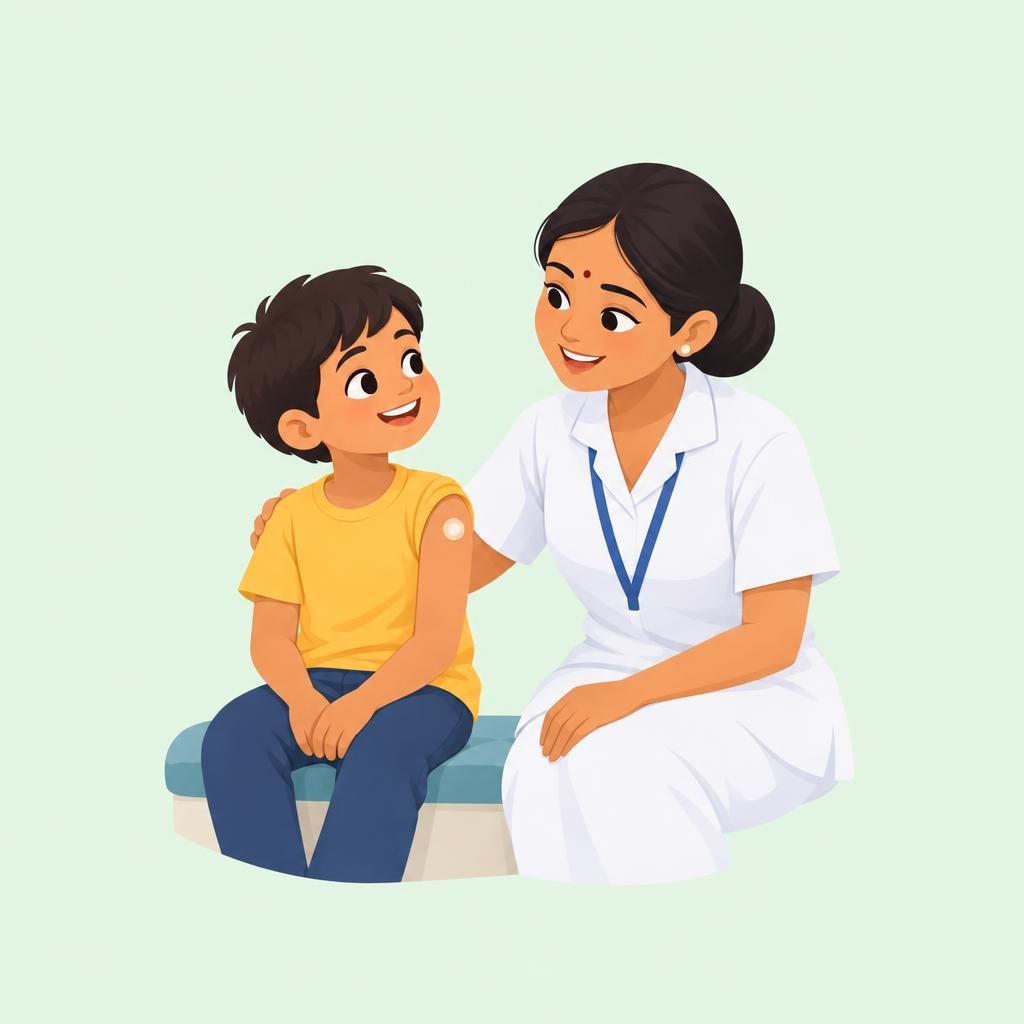
Your child gets a vaccine in the morning. By evening, the arm looks a little swollen and your child feels warm. You start to worry, and you wonder if you should have waited until your child was fully well. Many Indian families have felt the same.
In short:
- Vaccines protect children from diseases that can be deadly or cause lasting disability.
- Mild fever, sore arm, redness or swelling after a vaccine can happen. These effects are usually very minor, last a short time, and settle on their own in a few days.
- A mild cold, mild fever, ear infection or loose motions is not a reason to delay a vaccine. If a child is very sick, the doctor may wait until the child is better.
- Serious reactions are possible but extremely rare. Some signs need medical help right away.
What is a vaccine and how does it work?
A vaccine teaches the body's defence system to recognise a germ. Later, if the real germ enters the body, the defence system is ready to fight it. This is why vaccines are given at fixed ages, and why the vaccine card is important.
Like any medicine, a vaccine can cause side effects. Most are mild, such as a sore arm or a mild fever. These mild effects can happen, but they do not tell you how much protection your child has gained. A child who feels perfectly fine after a vaccine is just as protected as a child who feels a little unwell.
Should I worry about mild fever or swelling after a vaccine?
Mild fever, soreness, redness or swelling where the vaccine was given can happen. Muscle aches and headache can also happen. These effects are usually very minor, last a short time, and settle on their own in a few days.
Serious reactions, such as a severe allergic reaction or other serious injury, are possible but extremely rare. If a serious health problem shows up after a vaccine, it is not always caused by the vaccine. Only in very rare cases is the vaccine found to be the cause.
If you are worried about how you or your child feels after a vaccine, talk to your health worker or doctor.
Can my child get a vaccine during a mild illness?
Yes. A mild illness, such as a light cold, mild fever, ear infection or loose motions, is not a reason to skip or delay a vaccine. The child should be vaccinated on time.
A child with a mild fever can still be vaccinated. If the child does not look sick, the temperature does not need to be measured before a vaccine.
When a child is very sick with a moderate or severe illness, the vaccine is usually put off for a while. After the child gets better, the missed vaccine should be given as soon as possible.
Many parents wait because they want their child to be strong before a vaccine. But putting off vaccines because of small illnesses means many children miss their vaccines and stay unprotected.
Why timing matters
A person is far more likely to be badly harmed by a disease than by a vaccine. Diseases like measles, meningitis, hepatitis B and polio can be deadly or cause lasting disability.
Getting the recommended vaccines protects you and your child from these diseases. If a vaccine is delayed, the child remains open to illness during that time.
Keep the vaccine card safe. Check with the health worker that no vaccine has been left out.
What to do before and after a vaccine
- If your child has a light cold, mild fever or loose motions, take them for the vaccine as planned.
- Before the vaccine, tell the doctor or health worker how the child is and how long they have been unwell, so they can decide.
- If the child is very sick, ask when to come back, and get the vaccine as soon as the child is better.
- After the vaccine, let the child rest and offer fluids. If you are worried about fever or pain, ask the doctor or health worker what is safe for your child.
- Keep the vaccine card safe and check that no vaccine has been left out.
When to see a doctor
- Any reaction after a vaccine that you or your child were not expecting.
- Feeling dizzy, changes in eyesight, or ringing in the ears after a vaccine.
- A serious reaction, such as a severe allergic reaction, trouble breathing, swelling of the face or throat, or fainting. This is a medical emergency — get medical help right away.
Frequently asked questions
Can my child get a vaccine if they have a cold?
Yes. A light cold, mild fever, ear infection or loose motions is not a reason to delay. If the child is very sick, the doctor may wait until they are better.
How long do vaccine side effects last?
Mild soreness, swelling or fever usually last a short time and settle in a few days.
What if my child has a fever after a vaccine?
Mild fever can happen. If you are worried, or if the fever is high or does not settle, talk to your doctor or health worker.
Can a vaccine cause a serious health problem?
Serious reactions are possible but extremely rare. A disease like measles, meningitis, hepatitis B or polio is far more likely to cause serious harm.
For any health problem, see a doctor. This article gives general information and does not replace medical advice.