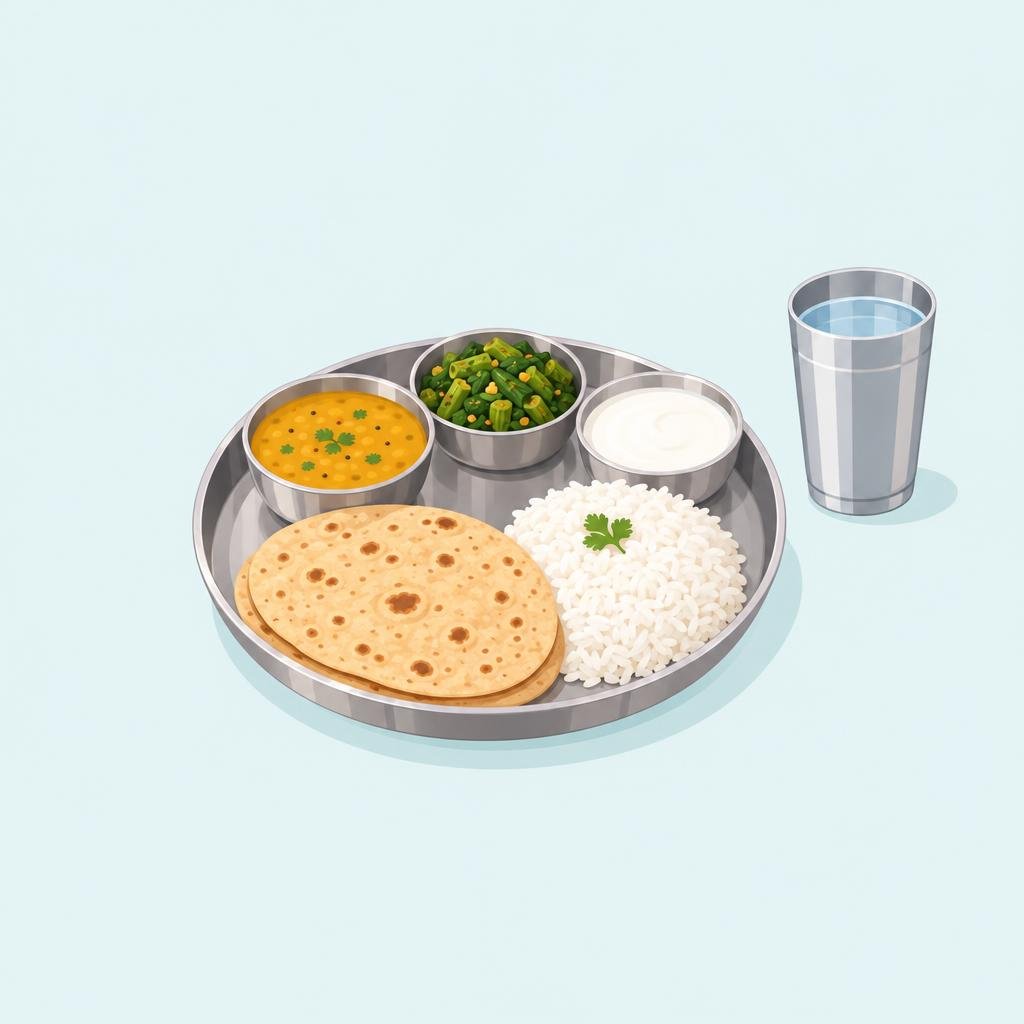
In many Indian homes, a glass of water sits next to every plate. Someone may say, do not drink water while eating, it will stop your food from digesting. At the same time, shops sell special alkaline water with big promises. Both ideas are about the same simple thing: water.
In short:
- Plain water is enough for good health. Your body keeps its own acid balance.
- Drinking water with meals or right after is fine. It does not stop digestion.
- Water helps digestion, waste removal, and body temperature.
- Very large amounts can harm some people, especially those with kidney or heart problems. In loose motions or vomiting, ORS is important to replace lost water and salts.
What does water do in the body?
Water is a basic need, like air and food. Every cell and organ needs it to work well.
Water helps in many everyday jobs:
- It helps carry nutrients to cells.
- It helps the body get rid of waste through urine, sweat, and stool.
- It helps keep body temperature normal, especially in Indian summers.
When you drink less water, you may feel thirsty, tired, or dizzy. Your urine may look dark yellow. In hot weather, or when you are active, your body loses more water. Fever, loose motions, and vomiting also drain water and salts fast. So ORS is important in loose motions and vomiting to replace both water and salts.
Is alkaline water good for health?
Alkaline water has a higher pH than ordinary water. Sellers often say it changes your body, improves immunity, and even helps with cancer. There is no good proof behind them.
Your body has its own system to keep acid balance steady. The kidneys and lungs do this work day and night. What you drink does not change that balance. There is no direct link between the pH of drinking water and your health.
There is almost no research on alkaline water for cancer. Saying it prevents or cures cancer is not justified. In daily life, alkaline water has not been shown to help with hydration, body functions, bones, or immunity. The few results seen were in athletes who drank very large amounts while exercising.
So:
- You do not need water with a special pH for health.
- Do not spend money on alkaline water for health reasons.
- Do not use alkaline water to prevent or treat cancer.
- If someone has kidney disease or heart failure, ask the doctor how much water is right for them.
Is it bad to drink water with meals?
You may have heard that water with food makes digestive juices thin and stops digestion. This is an old idea. It sounds believable because digestive juices look watery. But the body keeps making them, and water moves on quickly.
Water drunk with a meal does not stop food from being digested. It also does not sit on top of food and block digestion. Water actually helps the body work normally. It helps remove waste through urine, sweat, and stool. So drinking water during meals is fine.
At home:
- Keep a jug of clean water on the table at meal times.
- Choose water instead of sugary drinks.
- In hot weather and when you are active, drink more water. In fever, loose motions, or vomiting, the body loses water and salts, so ORS is important. Water can also be taken as tolerated.
- Fruits and vegetables with high water content also add to your daily water.
How much water is enough?
There is no single amount that fits everyone. Thirst is a useful guide. Pale yellow urine is another simple sign.
Drink water through the day. Do not wait until you feel very thirsty.
But more is not always better. Drinking very large amounts of water can lower the salt in the body. This is a bigger risk for people who already have kidney disease, heart failure, or a problem with body salts, or who are weak from another illness. People with these conditions should ask their doctor how much water is right for them.
In hot weather, or when you are active, drink more water. In fever, loose motions, or vomiting, the body loses water and salts. ORS helps replace both. Water can also be taken as tolerated.
When to see a doctor
See a doctor if you notice:
- Very little urine, or urine that is very dark.
- Dry mouth, sunken eyes, or no tears when crying.
- Dizziness, weakness, or confusion.
- Fever, loose motions, or vomiting that will not stop.
- Cannot keep water down.
- Swelling in the feet, ankles, or face.
- Muscle cramps, headache, nausea, or feeling very unwell after drinking a lot of water.
- Any health problem that worries you.
Frequently asked questions
Does alkaline water cure cancer?
There is almost no research on alkaline water for cancer. Using it instead of proper care can be harmful.
Can I drink water with my meals?
You can. Water with meals does not weaken digestive juices or stop digestion. It is good to drink water through the day.
Does water pH change my body's acid balance?
It does not. Your kidneys and lungs keep your acid balance steady. What you drink does not change it.
How do I know if I am drinking enough?
Thirst and pale yellow urine are simple signs. Drink more in hot weather and during activity. In fever, loose motions, or vomiting, ORS helps replace lost water and salts. If you have kidney disease or heart failure, ask your doctor.
For any health problem, see a doctor.