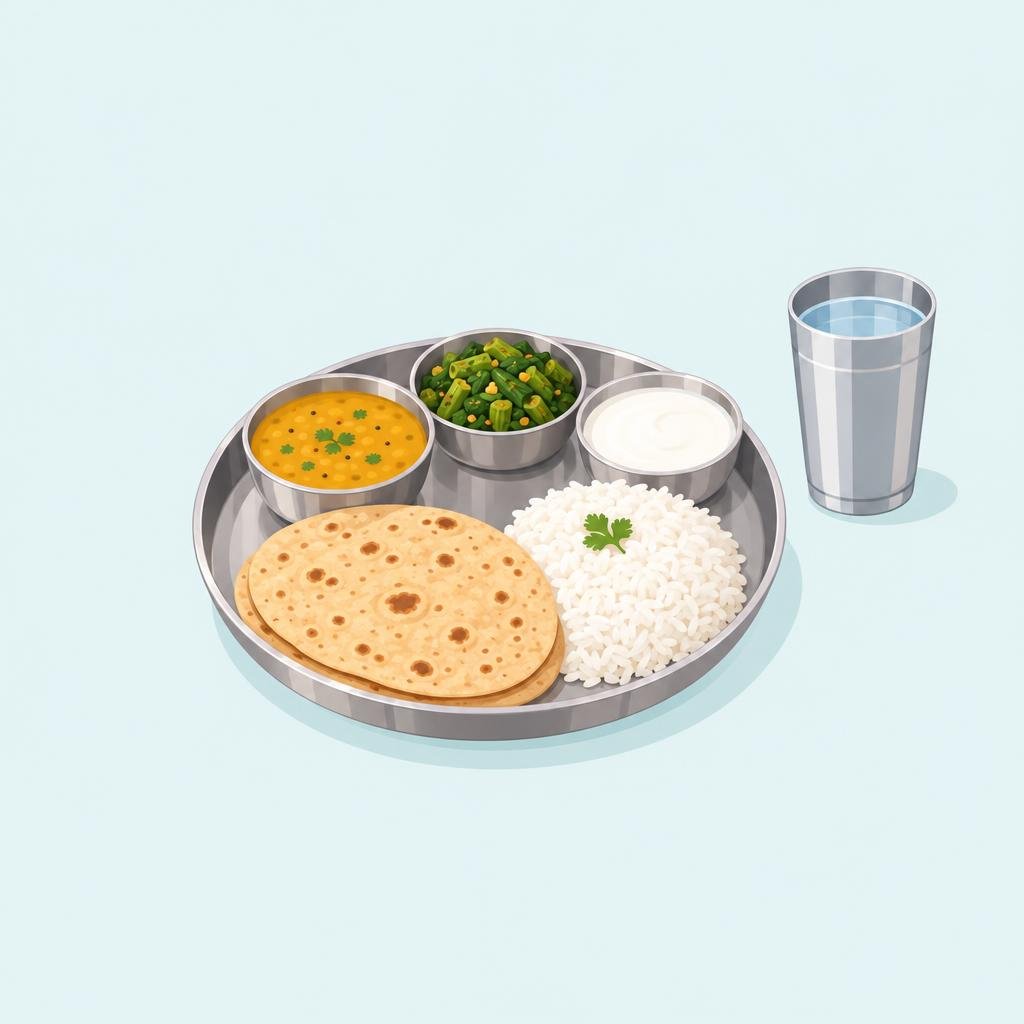
Brown rice, pink salt and burnt chapati are common dinner-table worries. Here is what really helps your family's health, in simple words.
It is dinner time. Dal is on the table, rice is in the bowl and rotis are stacked on the plate. Someone says brown rice is better, someone says pink salt is healthier, and someone is quietly worried about the one roti that got burnt.
In short:
- Brown rice is a wholegrain. It has more fibre and usually more vitamins and minerals than white rice, so it is the healthier choice.
- Pink salt is not better than ordinary salt. Its extra minerals are too few to help, some pink salt has been found with lead, and it usually has no iodine.
- Iodized salt helps lower the risk of iodine deficiency.
- It is not known whether eating a little burnt chapati causes cancer in people.
Why wholegrain rice is the healthier choice
Brown rice is rice with its outer layer still on. Fibre, vitamins and minerals sit in that layer.
White rice is polished, so most of that layer is removed. It still gives energy and can be part of a good meal, but it has less fibre than brown rice.
Fibre helps your stomach work well and keeps you full for longer. So when you have a choice, brown rice is the better pick.
Wholegrains also include whole wheat atta, oats, bajra, jowar and ragi. White rice is not bad — many families eat it every day and stay healthy. Just add wholegrains where you can.
What a healthy plate looks like
Starchy foods like rice, roti, potato and maize should be a little more than a third of your meal. The rest should be dal, vegetables, curd, eggs, fish, chicken, nuts and fruit.
Is one salt better than the other?
Pink salt does have more calcium, iron and magnesium than white salt. But the amounts are so small that you would need to eat a very large amount of salt to get any real benefit — and that much salt is bad for you.
Too much salt, from any source, raises blood pressure. High blood pressure raises the risk of heart disease and stroke. So the amount of salt matters more than its colour.
Some pink salt has been found with lead. Lead can harm many organs and gives no health benefit at all.
Why iodine matters
Iodized salt helps prevent iodine deficiency. Iodine is needed for children's growth and for their brain, and in pregnancy too.
Pink salt and other special salts are usually not iodized. Salt that has iodine says so on the packet, so check the packet.
People often think pink salt is the better choice because it is sold as natural and full of minerals. The minerals are real, but the amounts are too small to help your health.
What you can do:
- Use iodized salt for cooking and at the table.
- Keep the total salt you eat low, whichever salt you use.
- Do not use pink salt as a supplement.
- If you have high blood pressure or heart disease, be extra careful with salt.
Does burnt food cause cancer?
Cooking some starchy foods at a very high heat makes a substance called acrylamide.
Acrylamide has caused cancer in laboratory animals. Whether it causes cancer in people is not known.
Acrylamide also reaches the body from cigarette smoke.
The amount people get from food, smoke and other sources is far below the amount known to cause nerve damage in laboratory animals. So there is no proof that a slightly burnt chapati now and then causes cancer in people, and no reason to panic.
If you smoke, staying away from cigarette smoke lowers one more source. Scientists are still finding out how acrylamide affects people.
Simple steps for your kitchen
- Choose brown rice or other wholegrains when you can.
- Keep a little more than a third of your plate for starchy food, and the rest for dal, vegetables, curd and protein.
- Buy salt that says iodized on the packet.
- Use less salt overall, in cooking and on the plate.
- Cook food till it is done, not till it turns dark.
When to see a doctor
See a doctor if you notice:
- A swelling in the neck
- Feeling very tired or weak for no clear reason
- Getting breathless easily, or swelling in the feet
- A heartbeat that feels fast or uneven
- Weight loss without trying
Get emergency medical help right away for new or severe chest pain, or if someone faints or has trouble breathing. Do not wait.
If someone at home has a medical condition, special diet needs, or is pregnant, talk to your doctor or a registered dietitian.
Frequently asked questions
Is brown rice better than white rice?
Yes. Brown rice has more fibre and usually more vitamins and minerals. White rice still gives energy and can be part of a balanced meal.
Is pink salt healthier than white salt?
No. Its extra minerals are too few to help, it may contain lead, and it usually has no iodine. Iodized salt is the better everyday choice.
Does eating burnt chapati cause cancer?
It is not known. Acrylamide from high-heat cooking caused cancer in laboratory animals, but whether it causes cancer in people is not known.
Can children eat the same rice and salt as the family?
Children over one year can eat the family's meals, but their food should still have very little salt, not the same amount as adults. When you do use salt, iodized salt is the better choice for their growth and brain. Babies under one year should not have any salt added to their food, so keep their meals separate and right for their age.
For any health problem, small or big, see a doctor.