At a family dinner, someone passes the paneer and says, “No, I’ve started gym. I’ll take protein powder.” Another aunt says, “That will spoil your kidneys.” Both are worried about the same thing: protein. Protein is important, but the full picture is simpler than most people think.
In short:
- Protein repairs and builds the body. It is found in dal, curd, paneer, eggs, fish, chicken, soya and nuts, but how much a person needs varies.
- Vegetarian food can give complete protein when you eat different plant proteins through the day.
- If your kidneys are healthy, protein powder is not known to harm them. If your kidneys are weak, extra protein can make things worse.
- Ask a doctor or dietitian before starting protein powder if you have kidney disease or any long-term illness.
What is protein and what does it do?
Protein is a nutrient made of amino acids. The body uses it to build and repair muscles, skin, blood, hormones and enzymes. It also helps fight infection and keeps organs working.
- Builds and repairs muscle, skin and tissue.
- Helps the body fight infection.
- Supports growth in children and teens.
- Helps keep muscles strong as we age.
Most people in India eat some protein every day—dal, curd, paneer, milk, chana, rajma, nuts, eggs, fish or chicken. The body does not store protein as protein. It uses what it needs, and the rest is used for energy; the waste from this is passed out in urine. If you eat more protein than you need and your total energy intake is also high, the extra energy can be stored as fat. For most people, it is fine to eat protein at meals in the usual way; you do not have to avoid having more protein at one meal for this reason.
Can vegetarian food give complete protein?
Yes. Protein is built from amino acids. Some plant proteins are low in one or two amino acids. But when you eat different plant foods through the day, they cover each other.
Many people hear that some plant proteins miss certain amino acids and think only eggs or meat can give complete protein. Eating different plant proteins through the day covers the amino acids.
Easy Indian combinations
- Dal with rice or roti
- Rajma or chana with roti or rice
- Idli or dosa with sambar
- Curd or paneer with paratha or poha
- Peanut chutney with dosa or upma
- Soya chunks or tofu with rice or roti
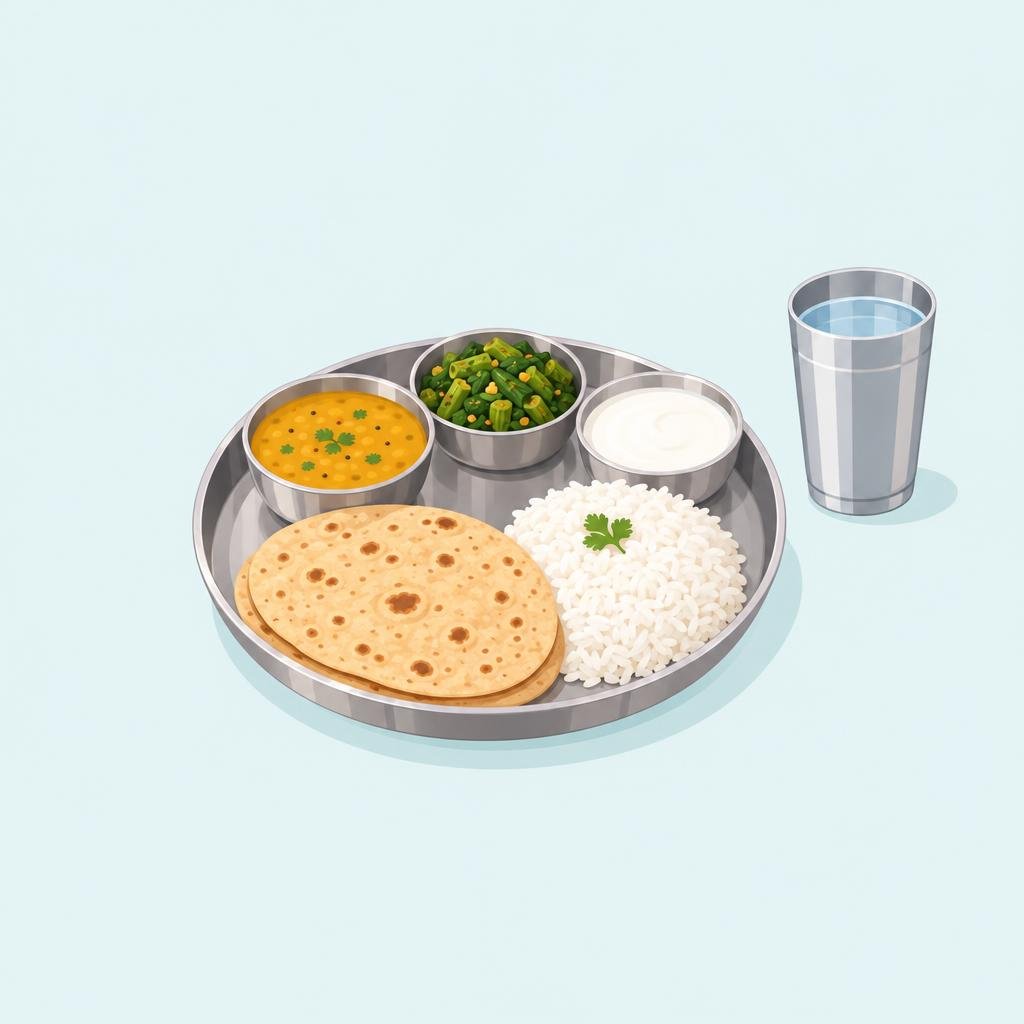
Eggs, fish and chicken also give protein. But they are not needed for complete protein. A vegetarian plate with dal, rice, curd and vegetables can give enough. For vegans, add nuts, seeds, soya and tofu.
When is protein powder helpful?
Protein powder is a convenience food. It can help when a person cannot eat enough protein from regular meals—for example, an older person with poor appetite, someone recovering from illness, or a person with a very busy day. But it is not a medicine, and it does not replace real food.
If you go to the gym
Muscle grows from exercise, rest and enough food. Protein powder may help you reach your protein needs, but it will not build muscle on its own. Roti, dal, curd, paneer, eggs, soya and chana can do the same job.
When can too much protein be a problem?
For people whose kidneys are healthy, there is no proof that protein powder or a high-protein diet harms the kidneys. That is reassuring for most young, healthy people. But high protein intake can raise the things in urine that help kidney stones form. Also, too much powder can replace balanced meals, and some products carry extra sugar or other added ingredients.
When the kidneys are already weak, more protein than the body needs makes them work harder. It can make kidney disease worse. In people who already have kidney disease, high protein intake has been linked to dialysis being needed sooner. For people with kidney disease, too little protein is also not good. The right amount matters.
What to do
- Eat a mix of protein foods each day. Use dal, chana, rajma, peanuts, nuts, seeds, soya, tofu, paneer, curd or milk.
- If you are vegetarian or vegan, do not depend on just one protein food. Change your proteins through the day.
- If your kidneys are healthy, you do not need to stop protein powder only out of fear of kidney damage. But you also do not need it if you eat well.
- If you already have kidney disease, or your doctor has told you your kidneys are weak, ask your doctor or dietitian how much protein is right for you before taking protein powder.
- If you have kidney disease, do not start any supplement or vitamin on your own. Talk to your doctor first.
- If you have kidney disease, eat fresh food cooked at home and cut down on salt as your doctor advises. Do not stop any medicine your doctor has given you.
If you have diabetes or BP, get your kidneys checked as your doctor advises.
Warning signs: when to see a doctor
See a doctor if you notice:
- Swelling around the eyes or in the legs, arms or belly.
- Foamy, bloody or dark urine.
- Passing much less urine than usual.
- Feeling very tired, weak, or sick without a clear reason.
- Poor appetite with nausea or vomiting.
These signs can have many causes. Only a doctor can find out the reason. Do not wait for them to become severe.
Frequently asked questions
Can vegetarian food give complete protein?
Yes. When you eat different plant proteins through the day—dal, chana, rajma, nuts, seeds, soya, tofu, paneer, curd or milk—you get all the amino acids your body needs.
Does protein powder damage kidneys?
If your kidneys are healthy, there is no proof that protein powder harms them. If your kidneys are weak, extra protein can make the disease worse, so ask your doctor or dietitian first.
Do I need protein powder to build muscle?
No. Muscle grows with regular exercise, rest and enough food. Protein powder is only an optional extra.
Which foods are high in protein?
Dal, chana, rajma, peanuts, nuts, seeds, soya, tofu, paneer, curd, milk, eggs, fish and chicken.
For any health problem, see a doctor. Do not self-treat or change your medicines on your own.