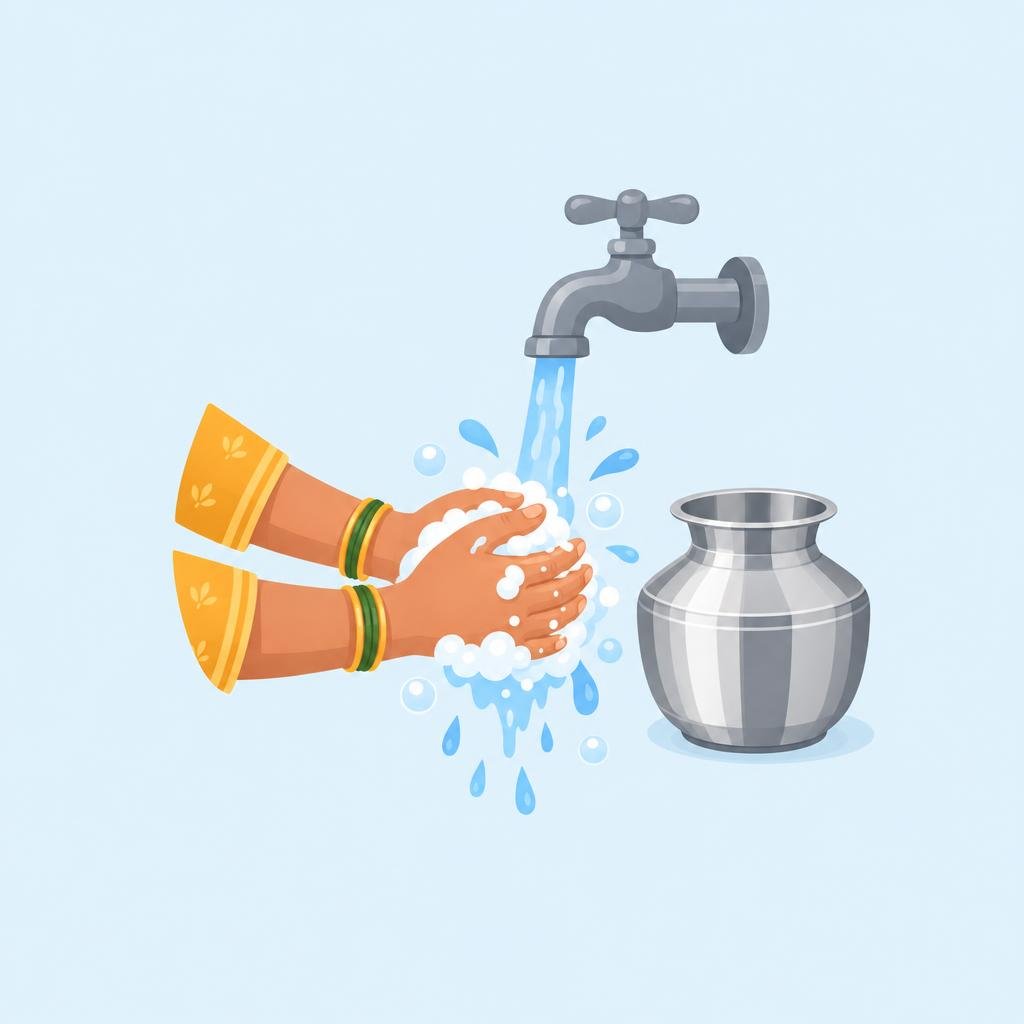
In many Indian homes, the cooler is filled before summer and the matka is kept in a corner. Someone says, 'Boil the water before drinking,' while old water sits in the cooler for days. Both habits are about the same thing: keeping water from making the family sick.
In short:
- Boiling drinking water to a rolling boil kills many germs that cause stomach infections.
- If you are not sure water is safe, boil it or use another safe method.
- Dengue mosquitoes breed in water stored in coolers, pots, tyres and tanks.
- Empty, scrub and dry those containers at least once a week, and keep stored water covered.
Why does water need care at home?
Water is used for drinking, cooking, washing and cooling. When it carries germs, it can cause loose motions, vomiting and fever. Tap water can sometimes get contaminated with germs that make people sick.
Stored water also matters. A little water in a cooler, bottle or flower pot saucer is enough for mosquitoes to lay eggs. Dengue mosquitoes often breed inside and around homes.
How can I keep water safe at home?
The first step is to know your water. If you are not sure the water is safe to drink, boil it. Bring it to a rolling boil. This is enough to make harmful bacteria, viruses and protozoa inactive. Boiling is one of the best ways to kill germs in water.
Boiling does not remove dirt or harmful chemicals. If water looks muddy, let it settle and strain it through a clean cloth before boiling. Let boiled water cool with a cover on, and store it in a clean, covered container. This also lowers the chance of burns and keeps dust and flies away.
For stored water and coolers, one cleaning is not enough. Dengue mosquitoes lay eggs on the inner walls of containers. The eggs stick there and can stay alive for months even when the container is dry. So just tipping the water out does not stop them.
Once a week:
- Empty, scrub and dry coolers, water tanks, flower pot saucers, bottles and old tyres.
- Cover water storage containers tightly, or use fine mesh so mosquitoes cannot get in.
- Throw away broken pots, cups and tyres that collect rainwater.
Protect your family from bites too. Wear full-sleeve clothes, use mosquito repellent as the label says, and use mosquito nets and window screens. Keep repellent away from small children's hands and mouth.
When a whole neighbourhood cleans its containers and covers its water together, mosquito numbers fall. Dengue spread can slow down or stop. Dengue does not spread directly from person to person. A mosquito that bites an infected person can later bite someone else and pass the virus.
When do these steps help, and what can they not do?
Boiling helps when you are not sure about the water. It makes the water safer to drink. It cannot make very dirty water clean, and it cannot remove chemicals. Hot water can burn, so keep it out of small children's reach.
Removing standing water helps cut mosquito breeding. But cleaning only once in a while, or only in one home, is not enough. Mosquitoes can breed in a tiny amount of water and fly from nearby homes. The work is best done together and repeated every week.
What should I do?
- If you are not sure water is safe, boil it to a rolling boil.
- Let it cool covered and store it in a clean, covered container.
- Once a week, empty, scrub and dry coolers, tanks, pots, bottles and tyres.
- Cover stored water tightly or with fine mesh.
- Wear full-sleeve clothes, use nets and screens, and use repellent as directed.
- Join your neighbours in weekly cleaning.
- If you think tap water is contaminated, contact your water supply office or health department. If people get sick from water, report it to the health department.
Warning signs: when should I see a doctor?
Most people get better with rest and fluids. But some signs need medical help. See a doctor urgently if anyone has:
- high fever
- severe headache or pain behind the eyes
- severe belly pain
- vomiting that will not stop
- cannot keep fluids down
- very little urine or dark urine
- dry mouth or sunken eyes
- bleeding gums or nose
- extreme tiredness or confusion
- trouble breathing
These signs can come with water-related infections or dengue. Do not wait for them to get worse.
Frequently asked questions
Does boiling water kill all germs?
Boiling kills many harmful bacteria, viruses and protozoa. It is one of the best ways to make water safer when you are not sure. It does not remove dirt or harmful chemicals.
Is it enough to tip water out of the cooler?
No. Eggs stick to the walls and can live for months when dry. Empty, scrub and dry the cooler at least once a week.
Can dengue spread from one person to another?
No, not directly. A mosquito that bites an infected person can later bite someone else and pass the virus.
Should I boil water if the tap water looks clean?
If you are not sure it is safe, yes. Clear water can still carry germs. If your supply is regularly safe, follow local health advice.
For any health problem, see a doctor.