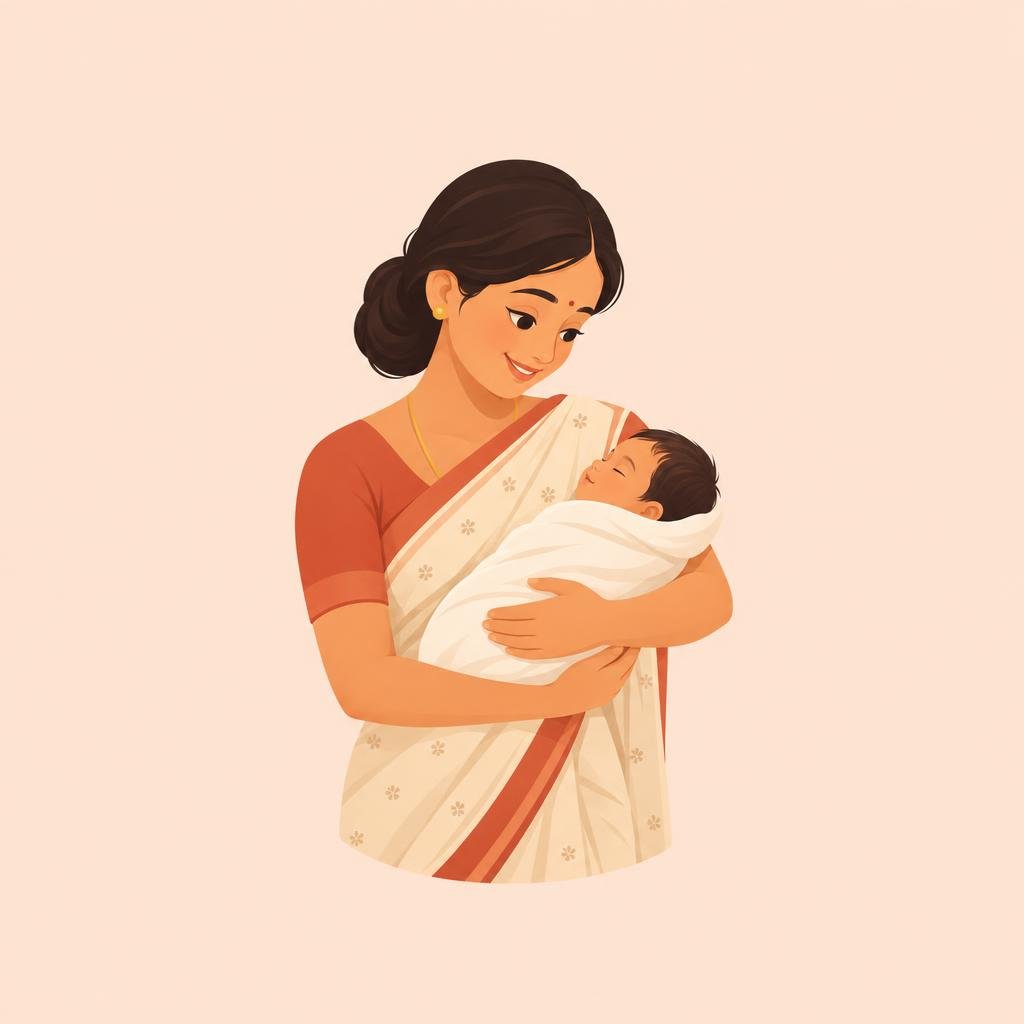
A grandmother looks at the thick yellow milk that comes just after birth and says it looks dirty, so it should be thrown away. Many families in India have heard this. But that first milk is the baby's first and most protective food.
In short:
- The first thick yellow milk is the baby's first food and helps protect against illness.
- Start breastfeeding within the first hour after birth.
- For the first six months, give only breast milk, even in hot weather. No water or other drinks.
- Feed often, day and night, and watch for wet diapers and growing well.
What is the first thick yellow milk?
At birth, the breasts make a thick, yellowish milk. It is often called the first milk. It comes in small amounts at first, then increases over the first few days. Most babies get all the nutrition they need from it.
This first milk is not dirty or old. It is packed with nutrients and helps the baby start building protection against illness. It is easy for a newborn to digest.
Why is the first milk so important?
The first milk is the baby's first food. It gives energy, nutrients and protection. It helps the baby fight infections. Starting breastfeeding within the first hour after birth and feeding only breast milk for the first six months helps protect the baby from infections.
Babies who are not breastfed, or are partly breastfed, are more likely to get diarrhoea, pneumonia and other infections. Breast milk is the best nutrition for most babies, including premature and sick newborns.
Some families throw away the first milk because it looks thick and yellow. This can harm the baby. The first milk should be fed to the baby.
Does my baby need water in hot weather?
For the first six months, breast milk alone gives all the food and water a baby needs. No other food or drink is needed, not even water. Breast milk is mostly water. Even on hot days, a baby under six months who is fully breastfed does not need extra water.
If the baby seems thirsty in hot weather, offer an extra breastfeed. Babies may want to breastfeed more often on hot days. Keep the baby in a cool, shaded place.
Giving water to a baby under six months can cause diarrhoea and malnutrition. It may also make the baby take less breast milk or stop breastfeeding early. This can harm the baby's growth and health.
How do I start breastfeeding well?
- Start breastfeeding within the first hour after birth.
- Feed only breast milk for the first six months.
- Feed the baby often, day and night, following the baby's hunger cues.
- Do not give water, other drinks or food in the first six months.
- From six months, start family foods along with breast milk. Continue breastfeeding up to two years or more.
If you are worried about your milk coming in or about breastfeeding pain, talk to a lactation consultant or your doctor or nurse.
How do I know my baby is getting enough milk?
Signs that a baby is getting enough breast milk include:
- At least six wet disposable diapers or eight washable cloth diapers a day.
- Unformed and plentiful stool, or soft, frequent potty.
- The baby is growing well in weight and length.
- The baby is active, wakes for feeds, and seems settled after feeding.
If the baby is very sleepy, refuses feeds, or has fewer wet diapers, ask a health worker.
What can go wrong with breastfeeding?
Some common problems are:
- Poor latch, when the baby does not take enough breast in the mouth.
- Cracked or sore nipples.
- Engorged breasts, when breasts feel hard and full.
- Blocked milk duct or breast infection.
- Worry that milk has not come in.
Most of these problems can be helped. A lactation consultant or health worker can check how the baby is latching and suggest ways to make feeding easier. Do not stop breastfeeding on your own. Ask your doctor or health worker.
When should I see a doctor?
See a doctor or health worker if:
- Pain while breastfeeding does not get better over the first 1 to 2 weeks.
- Nipple skin is cracked or damaged.
- Breast pain happens with poor latch, a blocked milk duct, or a breast infection.
- You are worried that your milk has not come in.
- The baby is very sleepy, refuses feeds, or has very few wet diapers.
- The baby is not gaining weight or is losing weight.
- The baby has fever, fast breathing, diarrhoea, vomiting, or looks unwell.
- You feel very low, hopeless, or unable to cope. You are not alone; ask for help.
Frequently asked questions
Is the first yellow milk good for my baby?
The first thick yellow milk is the baby's first food. It gives nutrition and helps protect against illness. It should be fed to the baby.
Should I give water to my baby in summer?
For the first six months, breast milk alone gives all the water a baby needs, even in hot weather. Offer more breastfeeds instead.
How often should I breastfeed a newborn?
Feed often, day and night, following the baby's hunger cues. Newborns usually feed many times in 24 hours.
When can I start other foods?
Start family foods at six months, along with breast milk. Continue breastfeeding up to two years or more.
For any health problem, see a doctor.