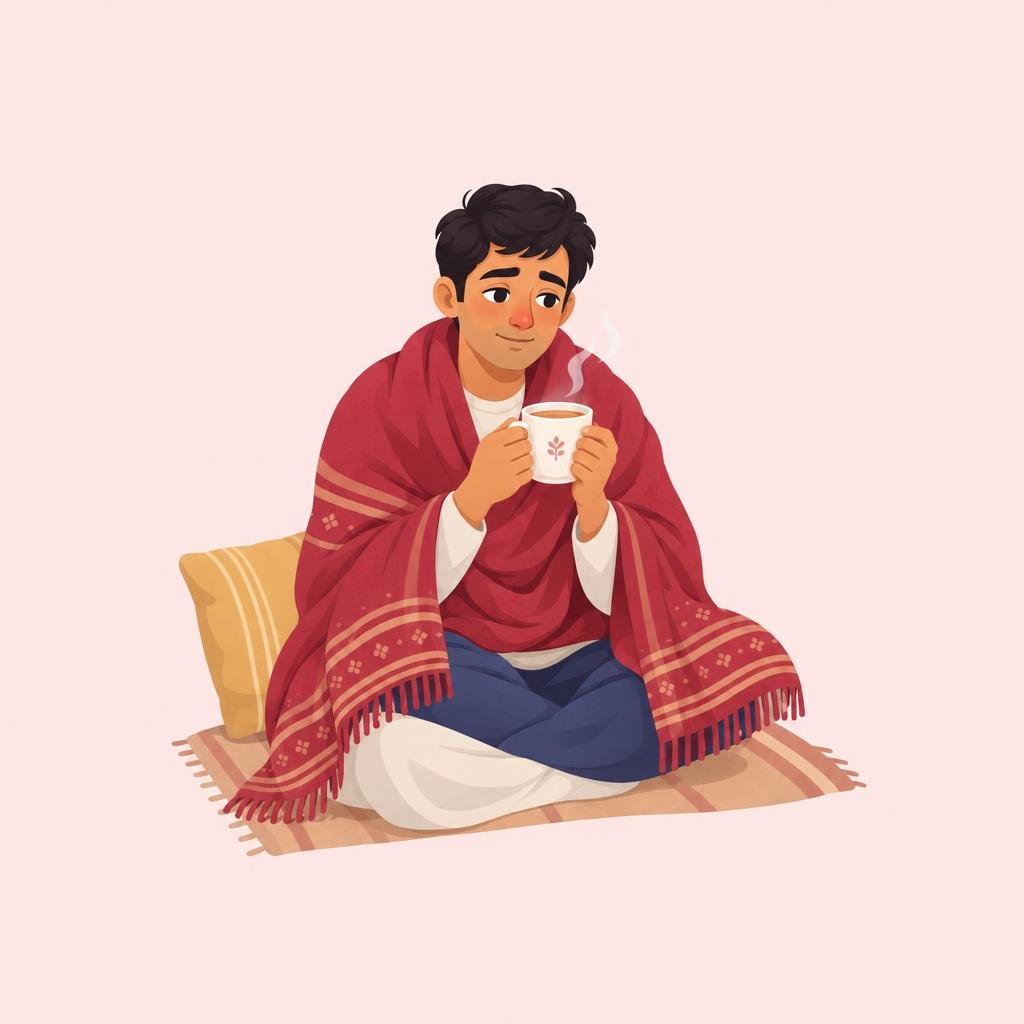
It is a hot afternoon. Your child drinks a glass of cold water or eats ice cream, and by evening starts sneezing. Someone at home says, “See, the cold came from the cold water.”
In short:
- Colds are caused by viruses, not by cold water or ice cream.
- A cold can happen at any time of year, not only in winter.
- Most people feel better in about 1 to 2 weeks, not always in 7 days.
- Antibiotics do not work on cold viruses; using them without need helps bacteria become resistant, so infections become harder to treat later.
What is a common cold?
A cold is an infection of the nose, throat and upper airways. It is caused by many different respiratory viruses. It spreads from person to person.
When a sick person coughs or sneezes, tiny droplets carry the virus. You can also catch it by touching a surface with the virus and then touching your eyes, nose or mouth. This is why hand washing matters so much.
A cold can happen any time of year. Winter may bring more of some viruses, but cold weather itself does not create a cold. Flu is caused by the influenza virus. It can feel like a cold, but it is not the same and can be more serious. COVID-19 can also start like a cold.
Do cold water and ice cream cause a cold?
No. Cold water and ice cream do not cause a cold. Viruses cause it.
Many families notice a cold around the same time as cold drinks or ice cream. That can make the link feel strong. Also, some viruses spread more in cold weather, so people get colds then. But the cold drink is not the cause.
You do not need to stop cold water or ice cream to prevent a cold. If your throat hurts, warm drinks or soft food may feel better. That is comfort, not a rule.
How long does a cold last?
A cold usually gets better on its own. Most people feel better in about 1 to 2 weeks. It does not always finish in 7 days.
Some symptoms, like a runny or stuffy nose and cough, can last up to 10 to 14 days. Young children may have symptoms for longer. There is no cure that removes the cold quickly. Some medicines can give short-term relief from symptoms, but they do not cure the cold.
Antibiotics do not work against cold viruses. They do not shorten the illness or stop it from getting worse. Taking antibiotics when they are not needed helps bacteria become resistant. Then antibiotics may not work when a bacterial infection really needs them.
What helps when you have a cold?
Most people can care for a cold at home.
- Rest and drink enough fluids, like water, warm water, soup or dal water.
- Eat simple food if you feel hungry, such as dal-chawal, khichdi or roti.
- Use warm drinks if they comfort your throat. Do not inhale hot steam; it can burn.
- Wash your hands often with soap and water.
- Cover your coughs and sneezes with your elbow or a tissue.
- Stay away from people who are sick, and stay home when you are sick if you can.
- Ask a doctor or pharmacist about medicines for fever or body ache. Do not take anyone else’s medicine.
If you think it could be COVID-19 or flu, get tested, especially if you are at higher risk. If you are at higher risk, talk to a doctor early. Antiviral treatment for COVID-19 and flu works best when started soon after symptoms begin.
What does not help, and can even harm?
Antibiotics are not for colds. They work on bacteria, not on cold viruses. Taking them when you do not need them helps bacteria become resistant and makes infections harder to treat later.
Do not use leftover antibiotics or share medicines. Do not stop any medicine your doctor has given you for another health problem. If you are unsure, ask a doctor.
Avoiding cold water or ice cream will not prevent a cold. But if a person has trouble swallowing or feels worse, get medical help.
When to see a doctor
See a doctor if you notice any of these warning signs:
- Trouble breathing, fast breathing, shortness of breath, wheezing, or chest pain.
- Fever that lasts more than 3 days.
- Symptoms that last more than a week, especially more than 10 days, or symptoms that improve and then return or get worse.
- Dehydration, such as very little urine, dry mouth, or dizziness.
- In a baby under 3 months, fever of 38°C or higher.
- In babies, older adults, or people with weak immunity or long-term illness, cold-like symptoms can become severe.
- Worsening of a long-term condition like COPD or heart failure.
Frequently asked questions
Can antibiotics cure a cold?
No. Colds are caused by viruses. Antibiotics work on bacteria, not viruses. Taking antibiotics when they are not needed helps bacteria become resistant, so infections become harder to treat when you really need these medicines.
Should I stop ice cream or cold water when I have a cold?
No. They did not cause the cold. If they make your throat feel sore, choose warm drinks and soft food until you feel better.
Is a cold the same as flu or COVID-19?
No. Flu and COVID-19 are caused by different viruses. They can feel like a cold but can be more serious, especially for some people. If you are at higher risk, get tested and talk to a doctor early.
How can I protect my family from colds?
Wash hands often, cover coughs and sneezes, avoid touching your eyes, nose or mouth with unwashed hands, and keep distance from people who are sick. Stay home when sick.
For any health problem, always see a doctor.