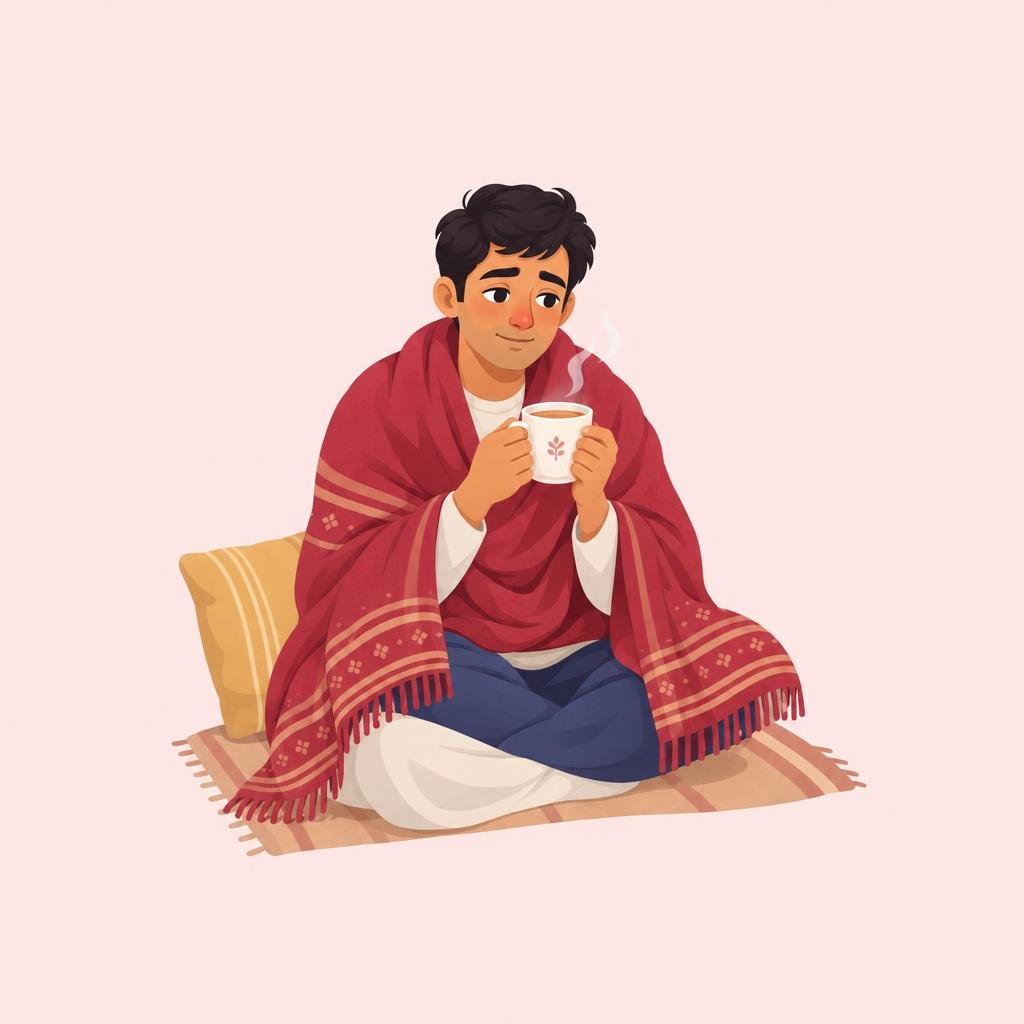
It is evening and someone in the family has a fever. One person wants to give a warm bath, and another says, “No, bathing will make it worse.” Later, someone with a scratchy throat asks for warm salt water to gargle, and the same small questions come up in almost every Indian home.
In short:
- Fever is the body’s way of fighting an infection, not something a warm bath makes worse.
- Cold water baths or cold sponging can cause shivering and make a person feel worse.
- A slightly warm bath, enough fluids and rest can help comfort.
- Warm salt water gargles can soothe an adult’s sore throat; children should not gargle salt water.
What is fever, and why does it happen?
Fever is the body’s own way of fighting an infection such as a virus. The body temperature goes up, and this can make you feel tired, achy and not hungry. It is a sign that the body is working, not a disease by itself.
Many families avoid bathing someone with fever because they want to keep the person safe. That worry is understandable. Cold water can make anyone shiver, so it is easy to think every bath will push a fever up.
Does bathing make a fever worse?
It depends on the water: a cold bath or sponging with cold water can make you shiver. Shivering can raise the body’s core temperature. So cold water is not a good way to cool someone with fever.
Do not bathe a child with fever in cold water. A slightly warm bath is not harmful. It can help the person feel clean, more comfortable and ready to rest.
If the person is uncomfortable, a slightly warm bath or a cool damp cloth on the forehead can help. Do not use cold water to bathe or sponge someone with fever.
How can I help someone with fever feel better?
Start with simple comfort and rest.
- Let the person rest and sleep as needed.
- Give enough water and other fluids to prevent dehydration.
- Use loose, light clothes so the person does not feel too hot.
- If a bath helps, use slightly warm water, not cold water.
- Keep checking how the person looks and feels, especially a child.
Fever can lead to dehydration, so fluids matter. Water, dal water, soup or other simple fluids can help. Avoid forcing food, but offer small amounts if the person is hungry.
What helps a sore throat?
A sore throat is common and usually gets better on its own within a week. Most sore throats are caused by viruses, such as cold or flu viruses.
Warm salt water gargles can help soothe a sore throat and may shorten how long it lasts. Adults can gargle with warm salt water. Children should not gargle salt water.
Drink plenty of water and take rest, and warm drinks can feel soothing for some people. If a sore throat is part of a cold, simple home care is often enough. Antibiotics usually do not help a sore throat caused by a cold virus.
Do antibiotics help fever and sore throat?
Most sore throats and many fevers are caused by viruses. Antibiotics kill bacteria, not viruses. So antibiotics usually do not help a viral fever or a viral sore throat.
Using antibiotics when they are not needed is harmful. It helps resistant germs grow. Then antibiotics may stop working when a person truly needs them.
Do not use leftover antibiotics or share them with others. Only a doctor can decide if an antibiotic is needed. If you are worried about any medicine, ask your doctor or health worker.
When should I see a doctor?
Most fevers and sore throats can be cared for at home, but some signs need medical help.
- In a child younger than 3 months, fever means see a doctor.
- Fever with a rash that does not fade under pressure is a medical emergency.
- Being very sleepy, floppy, or hard to wake.
- Rapid breathing or grunting.
- Convulsions or seizures with fever.
- Trouble breathing.
- Trouble swallowing.
- Signs of dehydration, like peeing less or dark, strong-smelling pee.
- Very high temperature, or feeling hot, cold or shivery.
- Sore throat is not better after a week, or symptoms get worse.
If you are worried, it is okay to ask a doctor or health worker. Trust your instincts, especially with young children.
Frequently asked questions
Can I bathe my child during fever?
Yes, a slightly warm bath is okay if the child is comfortable. Do not use cold water, and do not bathe a child with fever in cold water.
Should children gargle salt water?
No, children should not gargle salt water; warm salt water gargles are for adults.
Can antibiotics cure a viral fever?
No, antibiotics do not work on viruses, and using them when not needed can help resistant germs grow and make antibiotics less useful later.
How long does a sore throat last?
Most sore throats get better on their own within about a week. See a doctor if it is not better after a week or gets worse.
For any health problem, see a doctor and follow their advice.